
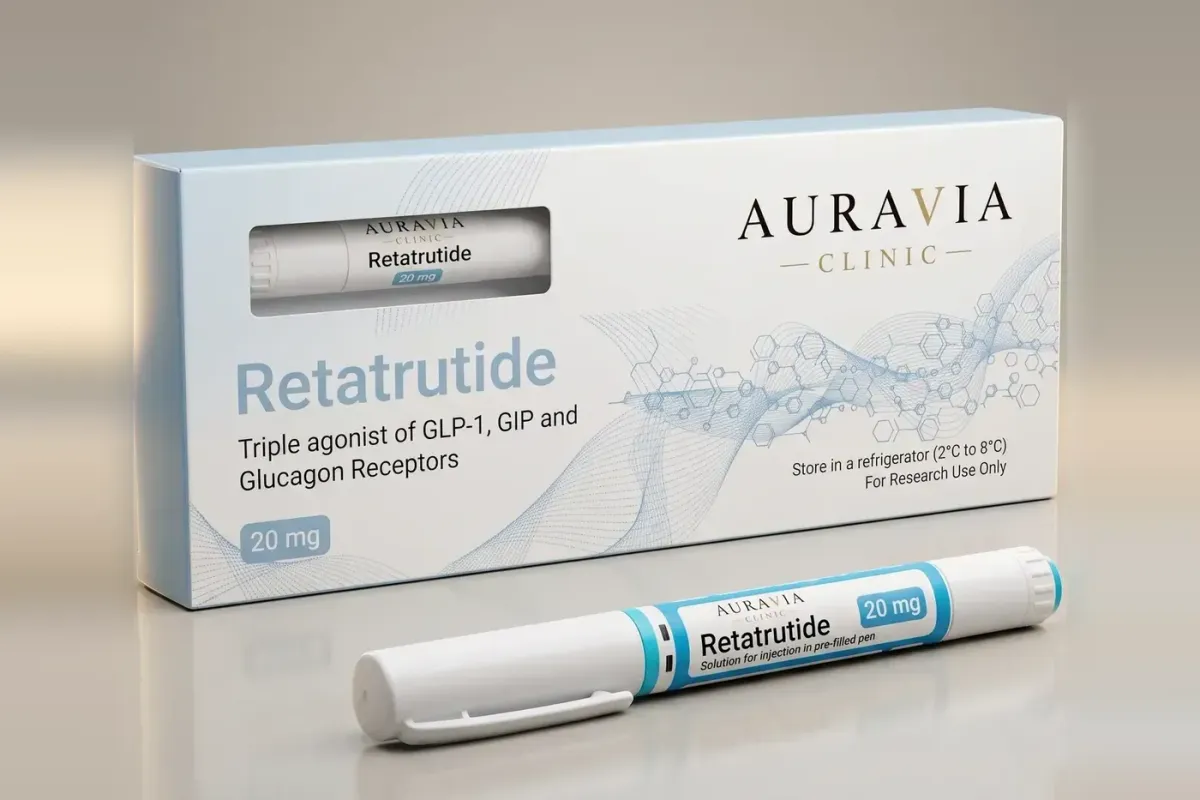
Description
Retatrutide: Benefits, Weight Loss Results, Side Effects and Latest Research
Retatrutide is an investigational medication developed by Eli Lilly and Company that is being studied for weight management, type 2 diabetes, and other metabolic conditions. Its unique mechanism of action targets three hormone receptors involved in appetite regulation, glucose control, and energy metabolism.
Clinical trials have reported substantial average weight loss among participants receiving retatrutide. However, retatrutide remains an investigational medicine and has not been approved for routine public use as of October 2026.
In this guide, we explain what retatrutide is, how it works, what clinical studies have found, its potential side effects, and what consumers should know about its current regulatory status.
What Is Retatrutide?
Retatrutide, also known by its research code LY3437943, is a triple hormone receptor agonist being developed for potential use in obesity and related metabolic conditions.
Unlike some existing weight-management medicines, retatrutide activates three receptors:
- GLP-1 receptor: Helps regulate appetite and blood glucose.
- GIP receptor: Plays a role in insulin secretion and metabolic regulation.
- Glucagon receptor: Participates in energy metabolism and glucose regulation.
This combination is designed to influence several biological processes involved in body-weight regulation.
Retatrutide is being studied as a once-weekly subcutaneous injection in clinical trials. Its appropriate clinical dose, safety profile, and long-term benefits must be established through research and regulatory review.
How Does Retatrutide Work?
Retatrutide works by activating the GLP-1, GIP, and glucagon receptors. These signaling pathways influence appetite, blood sugar, and the body’s handling of energy.
1. Appetite regulation
GLP-1 receptor activity can help regulate hunger and fullness. Researchers are investigating how retatrutide’s combined receptor activity affects food intake and body weight.
2. Blood glucose regulation
GLP-1 and GIP pathways participate in glucose-dependent insulin secretion. Clinical trials are examining whether retatrutide can improve blood-sugar control in adults with type 2 diabetes.
3. Energy metabolism
The glucagon receptor is involved in metabolic processes, including the regulation of glucose production and energy use. Combining this activity with GLP-1 and GIP receptor activation is a key feature of retatrutide’s development.
These mechanisms are being investigated in clinical research. They should not be interpreted as proof that retatrutide is suitable for every person seeking weight loss.
Retatrutide Weight Loss Results: What Do Clinical Trials Show?
Retatrutide has produced substantial average weight reductions in clinical trials.
In the Phase 3 TRIUMPH-1 trial, published in The New England Journal of Medicine in September 2026, researchers studied 2,339 adults with obesity or overweight and weight-related health conditions, excluding those with diabetes. Participants received retatrutide or placebo for 80 weeks.
Reported average body-weight changes were:
| Trial group | Average weight change at 80 weeks |
|---|---|
| Retatrutide 4 mg | −17.6% |
| Retatrutide 9 mg | −23.7% |
| Retatrutide 12 mg | −25.0% |
| Placebo | −3.9% |
These results represent averages observed in a controlled clinical trial. They do not guarantee similar outcomes for individual patients and should not be used as a dosing recommendation.
Researchers are also studying retatrutide in people with type 2 diabetes, cardiovascular disease, knee osteoarthritis, sleep apnea, and other obesity-related conditions.
Potential Benefits of Retatrutide
The potential benefits being investigated include:
- Weight management: Clinical trials have reported substantial average reductions in body weight.
- Blood-sugar control: Studies in adults with type 2 diabetes have evaluated changes in HbA1c and other measures of glucose regulation.
- Knee osteoarthritis symptoms: Research has examined changes in knee pain among participants with obesity and osteoarthritis.
- Sleep apnea outcomes: Trials have investigated whether treatment affects obstructive sleep apnea in adults with obesity.
- Metabolic health: Ongoing research is evaluating other potential effects on obesity-related health conditions.
Not every potential benefit has the same level of evidence. Retatrutide should not be described as an approved treatment for these conditions while regulatory evaluation remains incomplete.
Retatrutide Side Effects and Safety
Gastrointestinal side effects have been among the most commonly reported adverse events in retatrutide studies.
Potential or observed concerns include:
- Nausea
- Diarrhea
- Vomiting
- Constipation
- Abdominal discomfort
- Reduced appetite
- Dehydration associated with persistent vomiting or diarrhea
The complete safety profile, including uncommon and long-term risks, continues to be evaluated. Investigational medicines require ongoing assessment because clinical-trial findings may not identify every risk that could emerge during wider use.
Severe or persistent abdominal pain, repeated vomiting, fainting, or signs of a serious allergic reaction require urgent medical assessment.
Retatrutide should not be self-administered outside an authorized clinical trial. Products sold online under the retatrutide name may have uncertain ingredients, concentration, purity, or sterility.
Retatrutide vs. Semaglutide vs. Tirzepatide
Retatrutide, semaglutide, and tirzepatide are different medicines that act on hormone pathways associated with appetite and metabolic regulation.
| Feature | Retatrutide | Semaglutide | Tirzepatide |
|---|---|---|---|
| Receptor targets | GLP-1, GIP and glucagon | GLP-1 | GLP-1 and GIP |
| Weekly injection formulations | Investigational | Available in approved products | Available in approved products |
| Routine approved use | Not approved as of October 2026 | Depends on the specific product and indication | Depends on the specific product and indication |
| Long-term evidence | Still developing | More established | More established |
Clinical-trial results from different studies cannot be compared directly without considering differences in participants, treatment duration, trial design, and statistical methods.
People considering medical weight management should discuss approved treatment options with a qualified healthcare professional.
Is Retatrutide FDA Approved?
No. As of October 2026, retatrutide has not been approved by the US Food and Drug Administration or other regulatory agencies for routine public use.
Eli Lilly has announced plans to submit a US Biologics License Application in the first quarter of 2027. Submission is not the same as approval, and future availability will depend on the regulatory review process.
Retatrutide is currently being studied through authorized clinical trials. It should not be marketed as an approved retail medicine.
Can You Buy Retatrutide Online?
Consumers should be cautious of websites or sellers claiming to supply retatrutide for human use outside authorized clinical trials.
An online listing, laboratory-style label, or claim of pharmaceutical purity does not establish that a product is genuine, safe, or authorized. Products sold as research chemicals may contain incorrect ingredients, harmful contaminants, or inaccurate concentrations.
Anyone interested in investigational treatment should seek information from a qualified healthcare professional or an authorized clinical-trial team. Approved weight-management medicines may be available for eligible patients under local prescribing requirements.
Frequently Asked Questions About Retatrutide
What is retatrutide used for?
Retatrutide is being investigated for weight management, type 2 diabetes, and other obesity-related conditions. It is not yet approved for routine public use.
How much weight can you lose with retatrutide?
In the Phase 3 TRIUMPH-1 trial, average weight reduction ranged from 17.6% to 25.0% across the studied groups over 80 weeks. Individual results can vary, and these trial figures are not a guarantee of personal outcomes.
Is retatrutide better than semaglutide?
There is no basis for assuming retatrutide is better for every patient. Although trial results have been promising, comparisons across separate clinical trials can be misleading. Retatrutide is also still investigational.
What are the most common retatrutide side effects?
Gastrointestinal events, including nausea, diarrhea, and vomiting, have been commonly reported. Its complete safety profile remains under investigation.
Is retatrutide available by prescription?
As of October 2026, it is not approved for routine prescribing. Access is limited to authorized clinical trials.
When could retatrutide become available?
Eli Lilly has announced plans to submit a US application in Q1 2027. The approval decision and any launch date remain uncertain.

Reviews
There are no reviews yet.